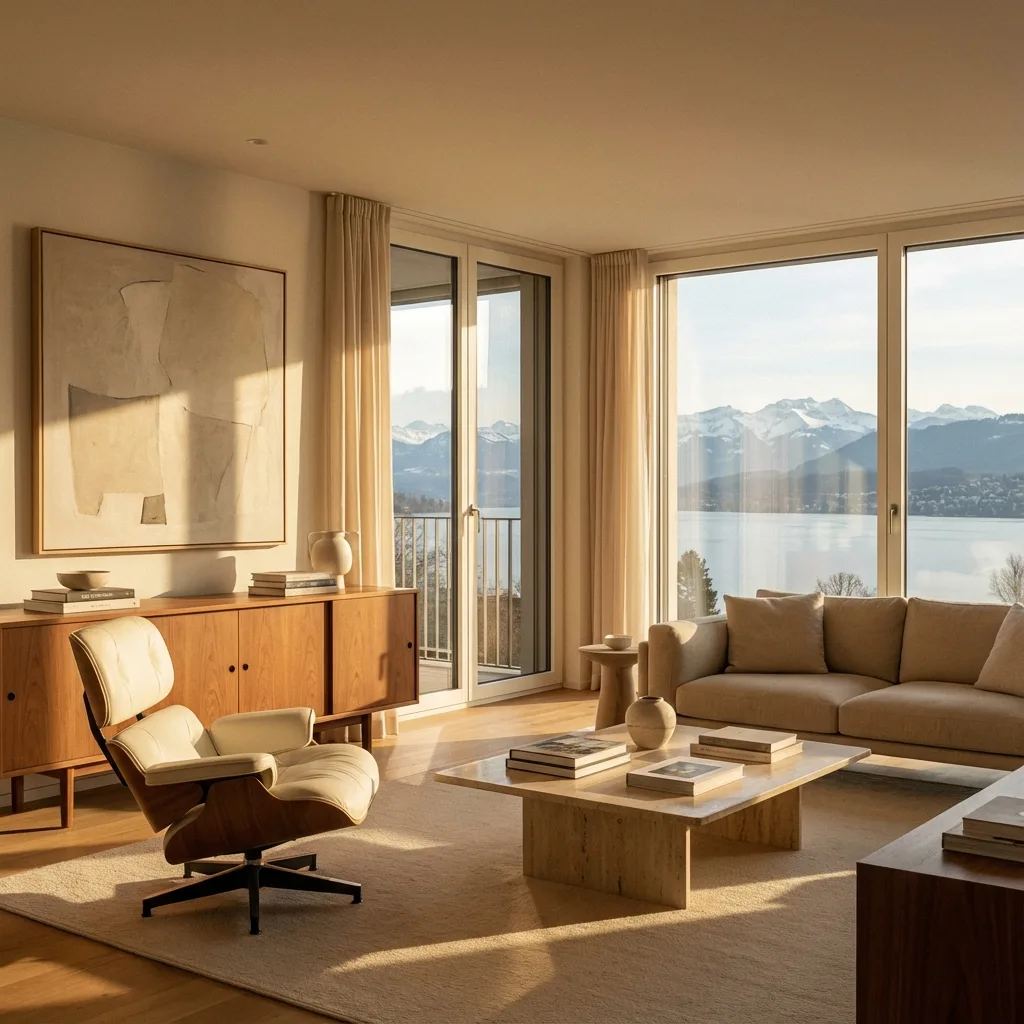
Lump-Sum Taxation in Switzerland: Why Your Home Sets the Tax Base (2026)

TL;DR / Executive Summary
- The Expenditure Rule: Under lump-sum taxation, you are taxed on your worldwide living expenses, not on your worldwide income and wealth.
- The 7x Housing Rule: The tax base is at least seven times your annual rent (or the rental value of a home you own), and never below a statutory minimum.
- The Property Link: Renting a modest flat does not lower your bill below the minimum, and a large home raises it. Your choice of home therefore shapes your tax base directly.
- The Off-Market Reality: Homes at the level most lump-sum taxpayers look for (often above CHF 15,000 a month) are mostly let privately rather than on public portals.
Swiss lump-sum taxation lets foreign nationals who move to Switzerland and do not work there be taxed on their living expenses instead of their worldwide income and wealth. The tax base is the highest of three figures: your actual worldwide living costs, seven times your annual rent (or the rental value of a home you own), and a statutory minimum. That makes your choice of home a direct input into your tax bill.
The regime is known as Pauschalbesteuerung or Besteuerung nach dem Aufwand in German and forfait fiscal in French. It remains one of the main reasons wealthy families choose Switzerland, alongside stability, schools and quality of life.
Instead of declaring complex worldwide dividends, royalties and capital gains, you agree a tax base built around your cost of living, which is then taxed at the ordinary rates.
However, the legal process of attaining this residency is not merely a financial transaction handled passively by your wealth manager. It is a physical relocation. The Swiss tax authorities demand tangible, physical proof of your lifestyle center.
This creates a unique, high-stakes pressure on your housing search. You do not just need an apartment; you require a primary residence that mathematically and socially justifies your tax ruling.
Who Qualifies
Under federal law, lump-sum taxation is open to people who:
- Are not Swiss citizens (if one spouse is Swiss, the couple does not qualify).
- Take up tax residence in Switzerland for the first time, or after at least ten years abroad.
- Do not work in Switzerland. Managing your own wealth is allowed; gainful employment in Switzerland is not.
A permit is a separate question. EU/EFTA nationals can usually obtain residence as persons of independent means, while other nationals typically need a permit on grounds of important cantonal interest, and cantons expect a significant tax contribution. Always plan the permit, the tax ruling and the home together.
The "7x Rent" Rule
The tax base is the highest of three figures (see KPMG's overview for the details):
- Your actual annual living expenses worldwide, for you and your dependants.
- Seven times your annual rent, or seven times the rental value if you own your home.
- A statutory minimum. For the federal tax this was set at CHF 400,000 in 2016 and has since been indexed to inflation. Cantons set their own minimums, and several are well above the federal level.
A control calculation also ensures that certain Swiss-source income and assets are not taxed more lightly than under ordinary rules.
- The Theoretical Incentive: "If my tax base is tied to my rent, I should rent a modest apartment."
- The Reality: The statutory minimums and your actual worldwide living costs set a floor anyway. A small flat cannot bring the base below them, and it rarely matches the lifestyle the rest of your declaration describes. Tax authorities look at the whole picture when they issue a ruling.
In practice, most lump-sum taxpayers rent or buy a home that matches their real lifestyle, and plan their tax base around it. This creates steady demand for the ultra-premium segment of Swiss real estate: historic lakefront villas in Geneva, modern penthouses in Zug and secluded hillside estates in Ticino. Our guide to ultra-luxury rentals in Switzerland explains how that segment works.
Why HNWIs Operate Exclusively Off-Market
If you are a prominent global executive, entrepreneur, or heir negotiating a private tax ruling with a sovereign state, discretion is your most valuable asset.
The standard public housing market—scrollable portals, massive group viewings, and digital application forms—is entirely incompatible with this level of wealth relocation.
This is why lump-sum taxpayers rely heavily on the off-market.
- Absolute Privacy: You do not want your name publicly associated with a listing, and more importantly, you do not want the price of your rental to be public knowledge. A public rent price allows external observers, journalists, or competitors to reverse-engineer your approximate minimum tax bill.
- Inventory Quality: The "Appropriate" properties demanded by tax authorities (rentals exceeding CHF 15,000 to CHF 30,000+ per month) are rarely, if ever, listed on public portals like Flatfox or Homegate. Owners of these elite assets prefer discreet transactions.
- Speed of Execution: Registration, the permit and the tax ruling all depend on a real Swiss address, and the rent itself is part of the tax calculation. Families often need to secure a home quickly to establish residence on a planned date.
The Pivot: Accessing the "Whisper Market"
Traditionally, sourcing these ultra-premium, off-market properties required retaining highly expensive, boutique relocation agencies or relying on specific, localized wealth managers who happened to know a landlord with an empty villa.
The Problem: This fragmented approach is slow, opaque, and highly restrictive. A family office managing a relocation to Schwyz might not have the correct discrete contacts if the client suddenly decides the microclimate in Ticino is preferable. Public searches yield nothing but frustration and exposure.
The Offlist Solution
Offlist bridges this gap by bringing the private "whisper market" together in one discreet place: private landlords, family offices and estate managers who prefer not to list their homes publicly.
With Offlist, families and their advisers gain discreet access to premium homes across the lump-sum cantons. You can review penthouses and lakefront estates privately, sign NDAs digitally and arrange private viewings without engaging with the public market. Create a free private profile to start.
Stop Searching.
Be Found.
Join the private network used by Switzerland's top executives. Start your onboarding with just your email.
Top Cantonal Hotspots for Lump-Sum Taxation (2026)
Not all cantons offer this regime. Zürich voters abolished it in 2009, and Schaffhausen, Appenzell Ausserrhoden, Basel-Landschaft and Basel-Stadt have also abolished it. Most other cantons still offer it, with their own minimums and practice.
If you are planning a relocation, these are the primary jurisdictions to target:
1. The Canton of Zug (Crypto Valley)
While globally famous for its exceptionally low corporate tax rates, Zug significantly attracts lump-sum individuals seeking a dynamic, international environment.
- The Asset: Highly modern, energy-efficient lakefront villas with advanced security systems and direct access to international schools.
- The Vibe: Pragmatic, tech-forward and discreet. See our guide to Zug luxury rentals and municipal tax rates.
2. The Canton of Geneva
The classic, historical choice for the global elite, particularly those fluent in French or connected to international organizations.
- The Addresses: Lump-sum families typically settle in lakeside communes such as Cologny, Vandoeuvres or Collonge-Bellerive, where large homes are scarce and mostly let privately.
3. The Canton of Ticino (Lugano)
Offering the ultimate lifestyle compromise: Italian culture, cuisine, and weather, backed by Swiss legal security and efficiency.
- The Asset: Mediterranean-style villas in Collina d'Oro or modern penthouses in Castagnola with sweeping views of Lake Lugano.
- The Vibe: Relaxed luxury and a long tradition of welcoming lump-sum taxpayers. Our Lugano and Ticino guide compares the main areas.
4. The Canton of Valais (Verbier / Crans-Montana)
Highly popular for those who desire a permanent ski lifestyle or a high-altitude retreat.
- The Asset: Ultra-luxury alpine chalets with private wellness centers.
- The Challenge: Finding year-round (non-seasonal) rentals in elite ski resorts is notoriously difficult without a strong private network.
Conclusion
The lump-sum regime ties your tax position directly to your home. If you are also thinking about buying rather than renting, check first what you may buy under Lex Koller.
Finding that home requires seamless access to a hyper-exclusive layer of the real estate market that operates entirely on handshakes, non-disclosure agreements, and absolute privacy. At Offlist, we specialize in connecting global citizens with the exact off-market properties that satisfy both their uncompromising lifestyle expectations and the strict requirements of their tax advisors.
Frequently Asked Questions (FAQ)
Can I work inside Switzerland under Lump-Sum Taxation?▼
No. By legal definition, you cannot be gainfully employed within Switzerland. You are permitted to manage your own global private wealth, and you may serve on the board of foreign companies located abroad, but you cannot hold a Swiss employment contract or engage in Swiss commercial operations.
Can I just buy a property instead of renting?▼
Often, yes, but check Lex Koller first: non-EU/EFTA nationals with a B permit can currently buy only their own main home. If you own, the seven-times rule uses the rental value of the property instead of the rent. Many new arrivals rent first, to settle in and agree their ruling without tying up capital.
What is the absolute minimum tax bill I should expect?▼
There is no single figure. The bill depends on the canton, the municipality and the tax base agreed in your ruling. Because the minimum bases are high, the combined federal, cantonal and municipal tax commonly runs to six figures a year, so get a ruling before you commit to a home.

About the Author
Benjamin Amos Wagner
Founder of Expat-Savvy.ch & Offlist | Connecting Expats with Homes