Off-Market Property in Zurich: Buy or Sell Apartments, Penthouses & Villas
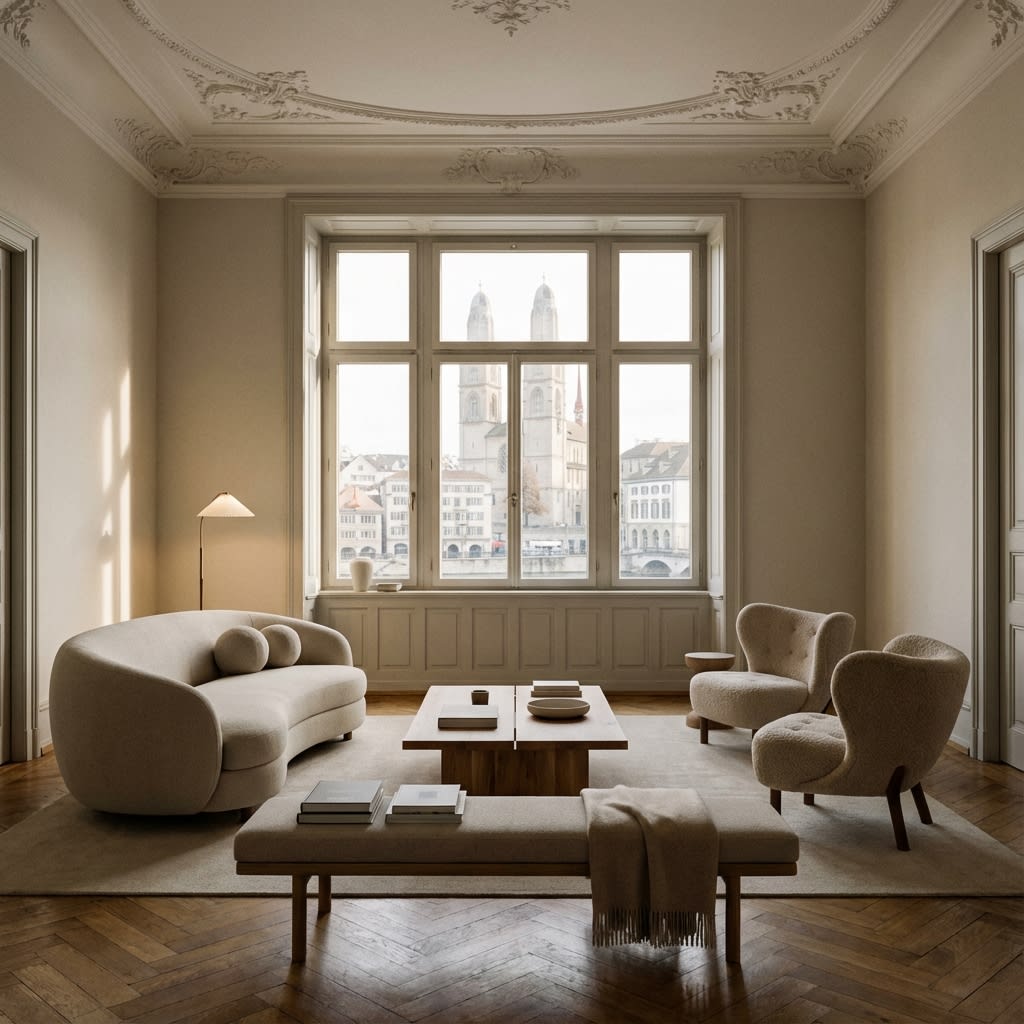
Off-market property in Zurich means apartments, penthouses and villas that are sold without ever being advertised on Homegate, ImmoScout24 or Comparis. Buyers get access by registering a verified search profile with proof of financing; sellers show their home only to a handful of qualified buyers. The legal process through the Zurich notary and land register is exactly the same as for a public sale.
This guide covers both sides of the market: how buying works, what prices look like by district, what the banks and the notary will ask of you, and why many Zurich owners choose to sell discreetly.
What "off-market" means in Zurich
An off-market property is for sale, but only a small circle chosen by the owner knows about it. In Zurich that circle is typically made up of private banks and wealth managers, specialised brokers, relocation agencies, lawyers handling estates, and curated platforms such as Offlist.
Three things make Zurich especially suited to this kind of discreet transaction:
- Extreme scarcity. On 1 June 2025 the City of Zurich counted just 235 vacant apartments, a vacancy rate of about 0.1% (Stadt Zürich). Canton-wide the rate was 0.52% in June 2026, against 0.93% for Switzerland (Federal Statistical Office via WBF). A good apartment does not need a public advert to find a buyer.
- Privacy culture. Many owners in Seefeld, Enge or on the Zürichberg do not want their address, interiors and asking price visible online.
- No MLS. Switzerland has no shared listing database. Each broker holds its own stock, so a lot of supply circulates only inside private networks.
How large the off-market share is, nobody measures officially. In our experience it rises sharply with price and exclusivity: at the top of the market, a public listing is the exception rather than the rule. For a side-by-side view of both channels, read our off-market vs. on-market comparison.
Zurich prices by district (2025)
Before looking at off-market offers, anchor your expectations in real transaction data. Statistik Stadt Zürich publishes median prices for freely traded condominiums (Stockwerkeigentum) each year. The figures below are for 2025 (Open Data Zürich):
| Area | Median price, 4-room condo | Median price per m² (4-room) |
|---|---|---|
| City of Zurich (all districts) | CHF 1,995,000 | CHF 17,193 |
| Kreis 2 (Enge, Wollishofen, Leimbach) | CHF 2,285,000 | CHF 20,590 |
| Kreis 7 (Fluntern, Hottingen, Hirslanden, Witikon) | CHF 3,250,000 | CHF 24,327 |
| Kreis 8 (Seefeld, Mühlebach, Weinegg) | CHF 2,225,000 | CHF 19,716 |
| Fluntern (Zürichberg) | CHF 3,630,000 | CHF 26,371 |
For comparison, the city-wide median for a 3-room condominium in 2025 was CHF 1,547,500 (CHF 18,054 per m²).
Read these numbers with care. District samples are small (a few dozen sales at most), and a median hides the spread. Lake-view units, renovated period apartments and penthouses in these districts regularly trade well above the median, and those are exactly the properties that tend to change hands off-market.
Buying off-market in Zurich
Step 1: Define a sharp search profile
Off-market access works by matching, not browsing. The more precise your brief, the faster you are shown something relevant:
- Districts, in order of preference (for example Seefeld, then Enge, then Kreis 7)
- Size, rooms, floor, outdoor space and parking
- Price range, including the upper limit you can stretch to
- Timing: ideal move-in date and your latest acceptable date
- Deal-breakers such as main-road noise, ground floor or no lift
Step 2: Prove your financing up front
Sellers and their advisers will not open the door to a buyer who cannot close. Before your first viewing, have one of the following ready:
- A written financing confirmation (Finanzierungsbestätigung) from your bank for the relevant price range, or
- Proof of funds for a cash purchase.
Swiss mortgage rules are the same off-market as on-market. Under the banks' self-regulation recognised by FINMA, buyers need at least 20% equity, of which at least 10% must be "hard" equity rather than pension money, and the mortgage has to be reduced to two-thirds of the lending value within 15 years (Swiss Bankers Association). Banks also run an affordability test with an imputed interest rate (commonly around 5%) plus maintenance costs, which should not exceed roughly one-third of gross income. For high-value properties many lenders apply stricter loan-to-value limits. Our penthouse buyer's guide walks through a full affordability example.
Step 3: Check your Lex Koller position
If you are not Swiss, confirm early that you are allowed to buy:
- EU/EFTA nationals living in Switzerland and C permit holders buy without authorisation.
- Non-EU nationals with a B permit can currently buy a main residence for their own use at their place of residence. A proposed tightening, in consultation until July 2026, would require them to obtain authorisation in future (Grundeigentümer Verband Schweiz).
- Buyers living abroad generally cannot buy residential property in Zurich. Holiday-home quotas only exist in tourist regions, and Zurich is not one of them.
Details and edge cases are in our Lex Koller guide for foreign buyers.
Step 4: Teaser, confidentiality, viewing
A typical off-market introduction runs in stages. You first receive an anonymised summary (district, size, key features, price indication). If it fits, you sign a confidentiality agreement and receive the address, floor plans and documents. Viewings are private, often with the owner or a single adviser present, never as an open house.
Step 5: Offer, reservation and due diligence
Negotiation is bilateral, so there is usually no bidding round. Once you agree on price and handover date, the parties often sign a reservation agreement. Be aware that under Swiss case law, a reservation agreement with a financial penalty is only enforceable if it is notarised, so an informal deposit protects less than many buyers assume.
Use the time before signing to check:
- The land register extract (encumbrances, easements, mortgages)
- For condominiums: the owners' association regulations, recent minutes and the balance of the renewal fund
- Building insurance, energy standard, planned renovations and any special levies
- Rental status, if the unit is let
Step 6: Notary and land register
In the canton of Zurich, purchase contracts are notarised by the official district Notariate, which also keep the land register (Notariate Kanton Zürich). The costs are moderate by Swiss standards:
- No property transfer tax. Zurich abolished its Handänderungssteuer on 1 January 2005 (Kanton Zürich).
- Notary and land register fees of roughly 1‰ each of the purchase price, plus VAT on the notarial part and separate fees for mortgage notes. The Notariate publish an online fee calculator.
The notary reads the contract to both parties, signatures are witnessed, and the purchase price is secured, typically through an irrevocable payment promise from the buyer's bank. Ownership passes with the entry in the land register. From accepted offer to keys, four to eight weeks is realistic if financing is already in place.
Mistakes that cost buyers off-market deals
- Viewing before financing is confirmed. Sellers remember buyers who waste their time, and the next introduction goes to someone else.
- Asking for a discount "because it is off-market". In a scarce market, discretion is not a reason to sell cheaply. Offers anchored in real comparables get taken seriously.
- Slow decisions. Private sellers often speak to two or three buyers in parallel. Have your adviser, bank and notary preferences lined up before the first viewing.
- Breaking confidentiality. Sharing the address or documents with friends or other brokers is the fastest way to be dropped from a network.
Stop Searching.
Be Found.
Join the private network used by Switzerland's top executives. Start your onboarding with just your email.
Selling off-market in Zurich
Why owners choose discretion
Most Zurich sellers who go off-market are not trying to hide anything. They want control:
- Privacy. No photos of your living room online, no address on a portal, no neighbours asking about the price.
- No public price history. A listing that sits for months, or is reduced, is visible to every future buyer. A private process leaves no trace.
- Qualified buyers only. Viewings are limited to people with confirmed financing and a clear Lex Koller position.
- Timing. You decide when the property is shown, which matters if you are still living in it, relocating, or settling an estate.
The trade-off is a smaller audience. That works well for distinctive properties in high-demand districts, where a handful of well-chosen buyers is enough to achieve a strong price. For standard apartments with no clear price reference, a public listing can still be the better tool for price discovery. Our owner's guide to selling property in Switzerland covers the public route in detail.
How a discreet sale works
- Valuation. Start from real comparables, not wishful thinking. A price that is too high kills an off-market process just as quickly as a public one. See our guide to property valuation in Switzerland.
- Documentation. Prepare the land register extract, floor plans, condominium regulations, renewal fund statement and renovation history before the first buyer asks.
- Anonymous presentation. The property is described without address or identifying photos to a short list of matched, pre-qualified buyers.
- Confidential viewings with serious candidates only, after a confidentiality agreement.
- Negotiation, notarisation and land register entry, exactly as in any Zurich sale.
Costs and taxes for sellers
Sellers in Zurich pay no transfer tax, but they do pay property gains tax (Grundstückgewinnsteuer) on the profit. The rate is progressive and falls the longer you have owned the property, so the holding period can be worth tens of thousands of francs. Get an estimate from your tax adviser before setting your minimum price.
Selling in Zurich without a public listing? Offlist introduces your property only to verified buyers with proven financing, with no portal exposure. See how a discreet sale works.
Neighbourhoods where off-market deals happen
Seefeld (Kreis 8)
Lakeside promenade, Jugendstil apartment buildings with high ceilings, and short walks to Bellevue and the Opera. Supply is tiny and turnover is largely private. Buyers compete for renovated period apartments and top-floor units with lake views. More detail in our Seefeld and Enge neighbourhood guide.
Enge (Kreis 2)
Quieter than Seefeld, with neoclassical buildings, the Rieterpark and the lake baths at Mythenquai. Proximity to the Google campus and Paradeplatz makes it popular with finance and tech executives. Expect a mix of large period apartments and modern attics.
Zürichberg (Kreis 6 and 7)
Fluntern, Hottingen and Hirslanden sit above the city: green, calm and close to the university hospitals and ETH. This is where most of the city's villas and large family apartments with gardens are found, and where 2025 median prices per m² were the highest in Zurich.
The Gold Coast
Küsnacht, Zollikon, Erlenbach, Herrliberg and Meilen line the sunny eastern shore of Lake Zurich. Lakefront villas here change hands rarely and mostly privately. The municipal tax multipliers are generally lower than in the city of Zurich, which is part of the appeal for high earners.
Penthouses and villas
Penthouses (Attika)
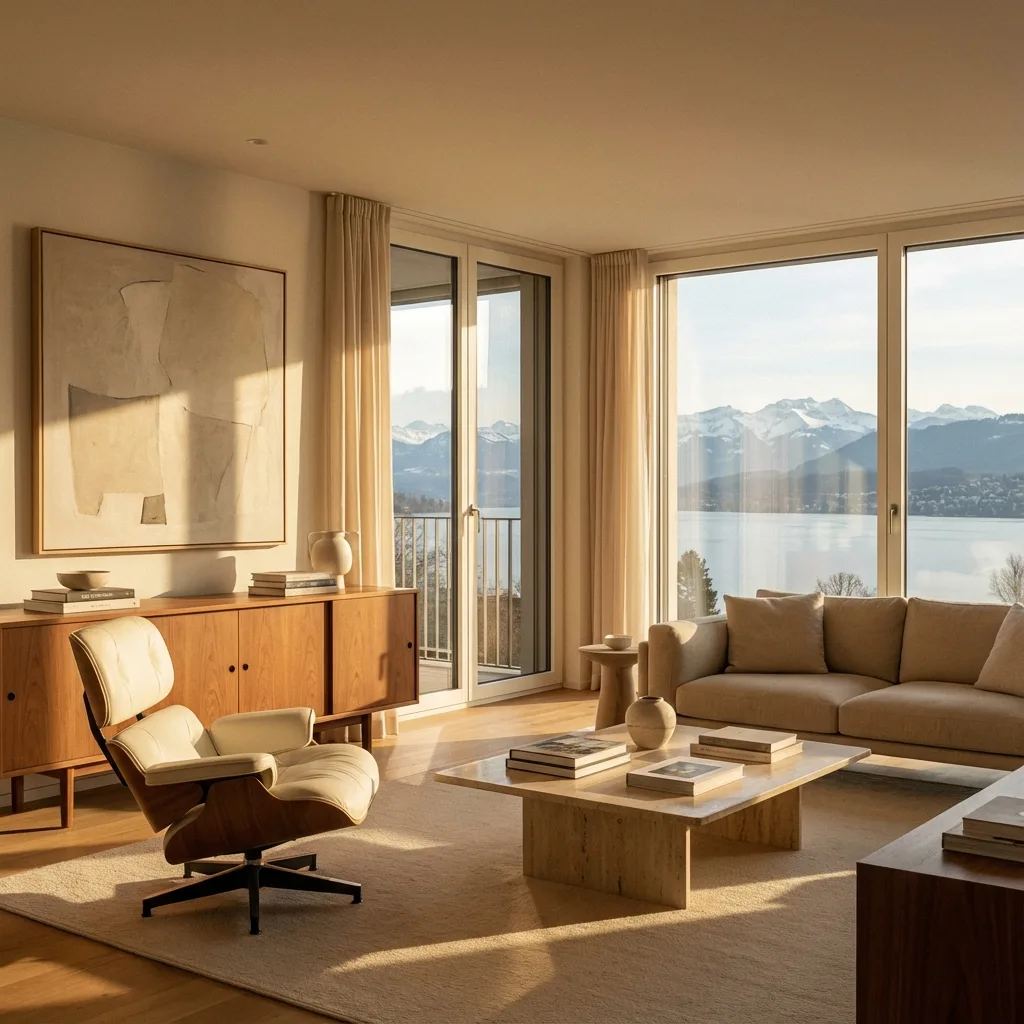
In Zurich a penthouse is usually an Attika: a top floor set back from the facade, which creates a wraparound terrace. Height limits keep most residential buildings low, so there is at most one Attika per building, and owners tend to hold them for a long time. When one comes up, it is typically offered first to a short list of known buyers.
What matters most is terrace size and orientation, the view corridor (and whether it could be built in), private lift access and the condominium rules for the roof. For financing, notary steps and a full cost breakdown, read our guide on how to buy a penthouse off-market in Zurich.
Villas
Inside the city limits, detached houses are rare and concentrated on the Zürichberg and in parts of Wollishofen and Höngg. Most villa buyers therefore look at the Gold Coast, the left lake shore (Kilchberg, Rüschlikon, Thalwil) or the Pfannenstiel hills. For villas, budget extra time for due diligence on zoning, building rights and any easements recorded in the land register.
Renting off-market in Zurich
Many people who search for off-market Zurich property want to rent, not buy. The rental side works in a similar way: landlords of high-end apartments often prefer to let through relocation agencies, company HR networks and private platforms instead of receiving hundreds of applications from a portal.
To be shown these apartments, you need a complete, credible file before you ask:
- Employment contract or proof of income, and your permit or permit assurance
- A Swiss debt collection register extract, or a home-country credit report if you have just arrived
- A short cover letter stating who will live in the apartment and for how long
Our rental application document checklist lists every document, and our guide to furnished luxury rentals in Zurich covers turn-key options and penthouses for rent.
A full-service relocation agent in Zurich typically charges around one month's rent or a fixed fee of roughly CHF 3,000 to 8,000, depending on scope (indicative, in our experience). If you are leaving a Zurich apartment early, you can propose a solvent, reasonable replacement tenant (Nachmieter) who is willing to take over the lease on the same terms; if the landlord has no valid reason to refuse that person, you are released from the lease.
Frequently asked questions
How do I buy an off-market apartment in Zurich?+
Register a clear search profile (districts, size, budget, timing) with a discreet network or specialised brokers and back it with a written financing confirmation from your bank. Suitable apartments are then presented to you privately, usually first as an anonymous summary and with the address only after you sign a confidentiality agreement.
How does an off-market sale of an apartment in Zurich work?+
The owner agrees a realistic price with an adviser, and the apartment is shown only to pre-qualified buyers who have proven their financing. The contract is then notarised at the competent Zurich Notariat and registered in the land register exactly like a public sale.
Can I find an off-market villa for sale in Zurich?+
Yes, but supply is very thin. Detached houses inside the city are rare, so most villas change hands on the Zürichberg, on the Gold Coast (Küsnacht, Zollikon, Erlenbach, Herrliberg, Meilen) and on the left lake shore, often through private networks and banks rather than portals.
How do I buy a penthouse off-market in Zurich?+
Define the non-negotiables first (terrace size, lake view, lift access), get your bank's financing confirmation for the full price range and register with networks that handle top-floor units. Good Attika apartments are usually placed with a short list of known buyers before any listing is considered.
Is it legal to buy or sell property off-market in Switzerland?+
Yes. There is no obligation to advertise a property publicly. Every sale, listed or not, must be notarised and entered in the land register, and the same Lex Koller rules apply to foreign buyers.
Can foreigners buy property in Zurich?+
EU/EFTA nationals living in Switzerland and holders of a C permit can buy freely. Non-EU nationals with a B permit can currently buy a main residence for their own use; buyers living abroad generally cannot buy residential property in Zurich, because the canton has no holiday-home quota.